
Bernard Whimp: Career, Chance Voight, Court Record and Key Facts
A fact-checked look at the New Zealand businessman, his investment career, earlier share offers, company history, court record, and the latest Chance Voight developments.

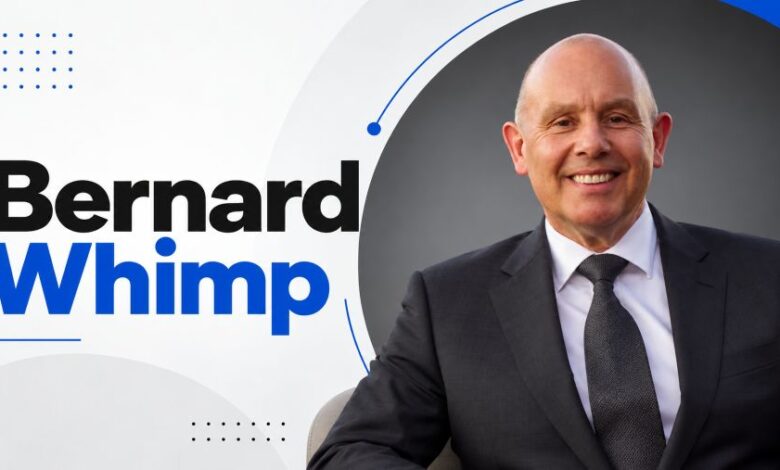
Bernard Whimp has spent decades around New Zealand business, investment, property, and finance.
His public record is unusual. Very unusual.
It stretches from company management and investment activity to court proceedings, unsolicited share offers, and the later growth of Chance Voight.
That last business became his biggest recent venture. Then things changed fast.
By 2026, the Chance Voight group was at the centre of Financial Markets Authority action and High Court liquidation proceedings.
Here is the verified story.
Quick Facts
| Fact | Detail |
|---|---|
| Full name | Bernard Terence Whimp |
| Known as | Bernard Whimp |
| Profession | Businessman and investor |
| Business connection | Rangiora, Canterbury, New Zealand |
| Main recent company | Chance Voight Investment Corporation Limited |
| Earlier field | Investment, finance and property |
| Chance Voight incorporated | 28 May 2021 |
| 1998 public record | Adjudicated bankrupt |
| 2006 action | Four-year company management prohibition |
| Court case | Bernard Terence Whimp v The Queen |
| Supreme Court result | Leave to appeal dismissed in 2009 |
| Recent status | Chance Voight group entities placed into liquidation during 2026 |
Who Is Bernard Whimp?
Bernard Whimp is a New Zealand businessman whose name has appeared in corporate, investment, regulatory and court records for many years.
He has worked around finance.
Property came into the picture too.
Later, investment management became a much bigger part of his public business activity.
One of the clearest recent examples was Chance Voight Investment Corporation Limited. The company was incorporated on 28 May 2021 and was set up as the parent holding company of a wider business group.
The plan centred partly on investment in Australian-listed shares and real estate.
That business grew.
So did public attention.
Early Public Business Record
There is very little reliable public material covering Whimp’s childhood, schooling or formal education.
So those details should not be guessed.
His documented business history goes back much further.
An official New Zealand Gazette record states that Bernard Terence Whimp, described at the time as a company director, was adjudicated bankrupt on 17 April 1998.
That is a confirmed public record.
It also gives some idea of how long his name has been connected with New Zealand commercial activity.
Company Management Prohibition
Another major point came in 2006.
A New Zealand Gazette notice recorded that Deputy Registrar of Companies Peter Barker prohibited Whimp from managing companies for four years.
The order was made under section 385 of the Companies Act 1993.
The restriction covered being a director or promoter and taking part, directly or indirectly, in company management.
The public notice was dated in 2006.
This was not a media rumour. It was a formal regulatory action.
Criminal Case and Supreme Court Proceedings
Whimp also became involved in criminal court proceedings connected with a company that had entered liquidation.
Court records state that he was convicted after a jury trial of offences involving burglary, removing records of a company in liquidation, and failing to comply with a requirement to supply company records.
The case later moved through the appeal process.
His Court of Appeal challenge was unsuccessful.
He then sought leave to appeal to the Supreme Court of New Zealand.
That application was dismissed on 4 February 2009.
The Supreme Court record identifies the case as Bernard Terence Whimp v The Queen, SC 83/2008.
So this part of his history is clear.
It comes directly from court material.
The Unsolicited Share Offers
A different chapter began around 2010 and 2011.
This time, the issue involved offers to shareholders.
Limited partnerships associated with Whimp approached owners of shares in several well-known listed companies.
Those companies included names such as TrustPower, Vector, Contact Energy, Fletcher Building, Guinness Peat Group and DNZ Property Fund.
Some offers caught the attention of regulators.
Why?
The headline price could look attractive.
But the payment terms mattered.
The Financial Markets Authority said some offers involved payment being spread over as long as ten years.
That changed the real economic value.
Pretty dramatically.
The regulator warned investors to read the terms carefully and compare the offer with the actual market value of their shares.
The FMA also stated that making an offer below market value was not, by itself, illegal.
The concern was whether an offer could mislead people about what they were really getting.
That difference matters.
FMA Action in 2011
Regulatory action followed.
In May 2011, the FMA issued a warning concerning unsolicited offers associated with Whimp.
It also ordered him and associated parties to place an FMA warning prominently in future unsolicited offer documents.
The regulator said it had received complaints from members of the public.
The High Court later confirmed that the deferred-payment offers under consideration were misleading.
This period made his name much more visible across New Zealand’s investment sector.
And the story did not stop there.
Return to Investment Business
Years later, Whimp again became active through investment-related companies.
His biggest recent project was Chance Voight.
Chance Voight Investment Corporation Limited was incorporated in May 2021.
According to the interim liquidators’ report, it was set up as the parent company of a wider group.
The business structure covered several activities.
Share investment was one.
Real estate was another.
Over time, the wider group included companies linked with finance, securities, mortgage investment, property and business services.
The structure became quite large.
What Was Chance Voight?
Chance Voight operated as an investment-focused business based in New Zealand’s South Island.
Its investment material discussed share-market investing, including Australian Securities Exchange investments.
The parent company sat above a wider collection of related entities.
Whimp was the central figure.
The group’s public material also discussed expansion and, at one stage, plans for a possible initial public offering.
That IPO did not happen.
By late 2025, a very different issue had emerged.
Regulators were looking closely at the group.
FMA Investigation
The Financial Markets Authority confirmed an investigation into Chance Voight in December 2025.
The investigation covered the parent company, subsidiaries, and associated people and entities.
The FMA said it was looking at several matters.
These included how the group had been managed, how investor money had been raised and used, how funds moved across the group, and whether information given to investors was accurate and complete.
The regulator was also checking compliance with company and financial-market laws.
These were investigation issues.
They should not be rewritten as criminal findings.
That distinction is important.
Interim Liquidation
Court action followed the investigation.
Six Chance Voight entities were placed into interim liquidation in December 2025.
The companies included:
- Chance Voight Investment Corporation Limited
- Chance Voight Investment Partners Limited
- CVI Partners Mortgage Fund Limited
- CVI Partners Mortgage Income Fund Limited
- CVI Securities Limited
- CVI Financial Limited
Interim liquidators were appointed.
Asset preservation orders were also made in connection with Whimp and Hanmer Equities Limited.
The FMA explained that the personal order stopped assets being moved overseas but did not otherwise stop him from accessing or using his personal assets.
Again, details matter here.
What the Interim Liquidators Reported
The interim liquidators later examined how the group operated.
Their report described serious financial and governance concerns.
It found that the consolidated group position was negative.
The report also said the business relied on continued investor inflows to meet obligations rather than depending only on realised investment gains or investment income.
That became a major point in later court proceedings.
The report also examined related-party dealings, business costs and the movement of investor money through the group.
These were findings and observations from the liquidators’ work.
They are best described that way.
Six Companies Enter Liquidation
The situation became firmer in July 2026.
The High Court placed six core Chance Voight companies into liquidation.
The FMA announced the decision on 24 July 2026.
The High Court found the group was insolvent and operating an unsustainable business model.
The court also found it had relied on new investor funds to meet existing obligations and could not meet debts as they fell due.
Five of the six companies were found insolvent.
The remaining company was a non-trading holding company and was wound up on separate grounds linked to confidence in its management.
This was a major change.
Interim liquidation had become full liquidation.
Another 23 Entities Follow
More court action came soon after.
On 10 September 2026, the High Court granted an FMA application to liquidate another 23 Chance Voight group entities.
The FMA announced the decision on 14 September.
The court found the active entities were insolvent and could not pay debts as they fell due.
Some inactive entities were also put into liquidation because the court considered it artificial to separate them from the wider group.
That brought a large part of the wider Chance Voight structure under liquidation.
Current Position in 2026
As of September 2026, Chance Voight is no longer simply a business facing regulatory questions.
Its core companies are in liquidation.
Many connected entities are too.
The FMA investigation into the group and associated people and entities also remains ongoing.
This point needs care.
Company liquidation does not automatically prove every allegation being examined in a regulatory investigation.
Any future enforcement finding should be judged from the final court or regulator record.
For now, the confirmed facts are already substantial.
Investment Approach
Before the liquidation proceedings, Chance Voight presented itself as an investment business with a focus on finding shares it believed were trading below their underlying value.
Australian listed equities were an important part of that approach.
The business also had property interests.
Whimp’s public investment material often focused on patience, company research and buying assets at prices he considered attractive.
Those were investment views and business claims.
They were not guaranteed results.
Bernard Whimp’s Net Worth
There is no reliable public figure for his personal net worth.
So a specific number should not be published.
Company assets cannot simply be counted as personal wealth.
Investor money cannot either.
Property connected to a company or related entity also does not automatically belong personally to its director.
Any online estimate that does not explain its evidence should be treated carefully.
Age and Date of Birth
A verified date of birth has not been established through reliable public sources reviewed for this profile.
For that reason, this article does not give an age.
Guessing from photographs would be poor practice.
The same rule applies to an estimated birth year.
Wife and Children
Reliable public records reviewed for this article do not give enough evidence to publish details about a wife or children.
So none are added here.
Private-life claims are easy to copy.
Checking them is harder.
This page sticks to facts that can be supported.
Education
No reliable source reviewed for this article clearly establishes a school, university, degree or professional qualification.
Those details are left out.
Simple.
If the evidence is weak, do not invent it.
Why Bernard Whimp Remains a Notable Business Figure
His public business history covers nearly three decades.
There was bankruptcy in 1998.
Then came company-management restrictions, criminal court proceedings, the share-offer disputes of 2011, a later return to investment activity, the creation of Chance Voight, and major liquidation proceedings in 2025 and 2026.
It is a long record.
And well documented.
For readers looking at his career, the most useful approach is to separate proven court and regulatory facts from claims still being investigated.
That keeps the picture fair.
It also keeps it accurate.
Final Thought
Bernard Whimp’s public record is closely tied to New Zealand investment and company history.
The Chance Voight period became the biggest recent chapter.
The company started in 2021.
By late 2025, the FMA was investigating.
By July and September 2026, large parts of the group had been placed into liquidation by the High Court.
The FMA investigation is still active.
So the story may yet change.
For now, court records, Gazette notices and FMA releases give the clearest account of what can safely be stated as fact.
Frequently Asked Questions
Who is Bernard Whimp?
He is a New Zealand businessman and investor with a long public record involving investment, finance, property and company activity.
What is Bernard Whimp’s full name?
His full name is Bernard Terence Whimp.
What is Chance Voight?
Chance Voight Investment Corporation Limited was established in 2021 as the parent company of a wider investment-focused business group.
Is Chance Voight still operating normally?
No. Six core companies were placed into liquidation in July 2026, followed by another 23 related entities in September 2026.
Is the FMA investigation finished?
No. The Financial Markets Authority said its investigation into Chance Voight and associated people and entities remained ongoing.
Was Bernard Whimp banned from managing companies?
Yes. A 2006 New Zealand Gazette notice imposed a four-year prohibition on his involvement in company management.
Was Bernard Whimp convicted of criminal offences?
Yes. New Zealand court records state he was convicted of burglary, removing company records while a company was in liquidation, and failing to supply required records. The Supreme Court dismissed his application for leave to appeal in February 2009.
What is Bernard Whimp’s net worth?
No reliable public source establishes his personal net worth, so a specific figure should not be stated.