
Rob Fyfe: From Air New Zealand CEO to Global Board Leader
A clear guide to his engineering roots, airline career, current business roles, public service and major honours.

Introduction
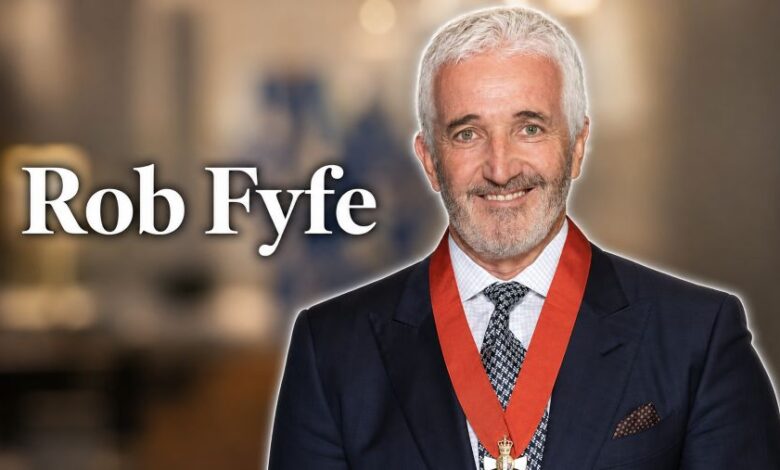
Rob Fyfe is a New Zealand business leader, corporate director and former chief executive of Air New Zealand. He is mainly known for leading the national airline from 2005 to 2012, a period linked with major changes in its strategy, workplace culture and international reputation.
As of July 2026, Fyfe remains active in business governance. His confirmed positions include serving as an independent non-executive director of Air Canada and chairing Michael Hill International. Current professional information also lists leadership or advisory work with Recorp, Fitout Solutions, Aotearoa Labour Hire, Next Generation Critical Communications and Craggy Range Wines.
His career is unusual because it connects engineering, military service, banking, telecommunications, aviation, clothing, retail, manufacturing and government advisory work.
Rob Fyfe Quick Facts
| Fact | Verified detail |
|---|---|
| Full name | Robert Ian Fyfe |
| Known as | Rob Fyfe |
| Nationality | New Zealander |
| Profession | Corporate director and business leader |
| Best known for | Former chief executive of Air New Zealand |
| Air New Zealand role | Chief executive from 2005 to 2012 |
| Education | Bachelor of Engineering with honours in mechanical engineering |
| University | University of Canterbury |
| Honorary qualification | Honorary Doctor of Commerce |
| Current major roles | Air Canada director and Michael Hill International chair |
| Former major role | Chair and chief executive of Icebreaker |
| National honour | Companion of the New Zealand Order of Merit |
| Main industries | Aviation, retail, manufacturing, banking and governance |
His full name, education, executive career and national honour are confirmed by official corporate, university and government records.
Who Is Rob Fyfe?
Rob Fyfe is one of New Zealand’s most experienced corporate leaders.
He became widely recognised while running Air New Zealand. However, his professional journey began long before he entered the airline industry. His background includes military engineering, banking, telecommunications and television businesses.
Today, he is mainly involved in company boards, business strategy and advisory work rather than managing one organisation’s daily operations.
Readers interested in similar careers can explore more New Zealand entrepreneurs and business leaders on NZ Beat.
Education and Engineering Background
Fyfe attended Burnside High School in Christchurch.
He later studied mechanical engineering at the University of Canterbury and graduated with a Bachelor of Engineering with honours in 1982. The university awarded him an honorary Doctor of Commerce degree in 2015.
He is also recognised as a Distinguished Fellow of Engineering New Zealand.
Engineering provided an important base for his later business career. Engineers learn to study systems, identify problems, test solutions and understand how different parts work together.
These skills can also be used inside companies. A leader must understand how employees, customers, technology, money and daily operations affect one another.
For another New Zealand leader who moved from technical training into international business, readers can explore Anna Mowbray’s business journey.
Early Career in the Royal New Zealand Air Force
Fyfe began his working life in the Royal New Zealand Air Force.
He became a Flight Commander responsible for maintaining the Air Force’s fighter aircraft while still in his twenties. This position required technical knowledge, organisation and responsibility for important equipment and teams.
The role also gave him early experience in making decisions where safety, accuracy and clear communication mattered.
His military engineering background separated him from many executives who began their careers in accounting, law or traditional business management.
Career in Banking, Telecommunications and Television
After leaving the Air Force, Fyfe worked in several different industries.
His career included positions connected with:
- Bank of New Zealand
- National Australia Bank
- Telecom New Zealand
- ITV Digital in the United Kingdom
The New Zealand Government’s official honours record identifies him as a former general manager at Bank of New Zealand and former chief operating officer of ITV Digital. Michael Hill’s company announcement also records experience across banking, telecommunications and television in several countries.
These roles helped him understand businesses with very different customers, technologies and operating systems.
His banking experience involved financial control and commercial decisions. Telecommunications introduced him to large technical networks. Television placed him inside a competitive consumer and media industry.
Readers interested in financial leadership explained in simple language can also read about Luke Kemeys and his accounting career.
Joining Air New Zealand
Fyfe joined Air New Zealand before becoming its chief executive.
His earlier positions at the airline gave him experience with its operations, finances, people and commercial challenges. He was appointed chief executive in 2005.
At that time, leading a national airline involved difficult questions about costs, international competition, customer service, aircraft investment and employee confidence.
Fyfe remained chief executive until the end of 2012.
Rob Fyfe’s Air New Zealand Leadership
Rob Fyfe is most famous for his seven years as chief executive of Air New Zealand.
Air Canada’s official profile credits him with helping deliver a major change in Air New Zealand’s strategy and culture while keeping the airline profitable during difficult economic periods.
During his leadership, Air New Zealand was named Airline of the Year by Air Transport World. It also received recognition in New Zealand for its reputation and attractiveness as an employer.
Fyfe’s work was not limited to financial performance.
He became known for communicating directly with employees and customers. He also treated company culture as an important business issue rather than something separate from operations.
A strong company culture does not simply mean keeping employees happy. It means creating shared standards about safety, service, responsibility and how decisions are made.
Fyfe’s period at Air New Zealand showed that customer experience, employee behaviour and financial performance can influence each other.
The Air Canada official director profile provides further verified details about his airline career and professional qualifications.
International Aviation Leadership
Fyfe also held important positions within the wider aviation industry.
He served as chair of the Star Alliance Chief Executive Board between 2010 and 2012. Star Alliance brings airlines together so that they can cooperate across routes, airports and passenger services.
He was also a member of the International Air Transport Association Board of Governors.
These positions placed him among senior leaders from major airlines around the world. They required him to consider international aviation issues rather than only the needs of Air New Zealand.
Leaving Air New Zealand
Fyfe completed his time as Air New Zealand chief executive in 2012.
Leaving the airline did not end his public business career. Instead, he moved into company ownership, board leadership, investment and advisory positions.
This change allowed him to use his experience across several organisations rather than concentrating on one airline.
His later career shows how an experienced chief executive can move from daily management into governance.
A chief executive normally runs the organisation. A board director helps oversee strategy, risk and senior leadership without managing every daily task.
Leadership at Icebreaker
After Air New Zealand, Fyfe became closely involved with Icebreaker, the New Zealand company known for clothing made with merino wool.
He served as chairman and chief executive of the business between 2013 and 2018.
This role moved him from aviation into international clothing and retail. Although the products were different, many of the business questions were similar.
Icebreaker needed to manage manufacturing, international markets, product quality, brand reputation and customer trust.
His government honours record recognises his work at Icebreaker as an important part of his wider contribution to New Zealand business.
Michael Hill International
Fyfe joined the board of Michael Hill International as a non-executive director in 2014.
Michael Hill is a jewellery retailer with operations in several countries. His appointment brought experience from international aviation, consumer brands and company transformation to the board.
He later became chair of Michael Hill International and continued to be publicly identified in that position in 2026.
The chair leads the board rather than managing stores or daily sales. This work includes guiding meetings, supporting good governance and helping the board hold senior management accountable.
For another example of operational leadership inside a major New Zealand financial-services company, readers can explore Debbie Eyre’s executive career.
Air Canada Board Role
Fyfe joined Air Canada’s board as an independent director in 2017.
His airline knowledge gives the board experience from another national carrier and from international aviation organisations.
His official Air Canada profile identifies him as a corporate director and former airline chief executive. It also records his experience in strategy, workplace culture, safety and business performance.
A non-executive director does not run the airline’s daily flights. The director helps oversee areas such as risk, leadership, long-term planning and company accountability.
Current Business and Advisory Roles
As of July 2026, Fyfe’s current professional profile lists the following positions:
| Organisation | Publicly listed role |
|---|---|
| Michael Hill International | Chair |
| Air Canada | Non-executive director |
| Recorp | Chair |
| Fitout Solutions | Chair |
| Aotearoa Labour Hire | Chair |
| Next Generation Critical Communications Programme | Chair |
| Craggy Range Wines | Adviser |
| Asia New Zealand Foundation | Honorary adviser |
These roles show that his present work reaches across aviation, jewellery, manufacturing, employment, infrastructure and wine.
The exact responsibilities are different in each organisation. However, they are connected by common board duties, including planning, risk management, leadership selection and long-term decision-making.
Work With the New Zealand Government
Fyfe has also used his operational experience in public advisory work.
He was appointed as an independent adviser connected with the proposed re-entry of the Pike River Mine drift. The issue involved technical, safety and family considerations.
During the COVID-19 pandemic, he worked as a link between the New Zealand Government and the private sector. His role included helping companies and public agencies cooperate during a national emergency.
Air Canada’s current profile also records that he acted as a special adviser to the prime minister on New Zealand’s pandemic response and recovery planning.
This work demonstrates an important difference between business leadership and public service.
A company may focus mainly on customers, employees and commercial results. A government emergency response must consider the safety and needs of the whole population.
Readers interested in careers that connect organisational leadership with public service may also read about Greg Fleming’s professional and public career.
Awards and National Recognition
Fyfe has received several important professional honours.
His recognised achievements include:
- New Zealand Executive of the Year
- Asia-Pacific Airline Chief Executive of the Year
- Engineering leadership recognition
- An honorary Doctor of Commerce
- Distinguished Fellow status from Engineering New Zealand
- Induction into the New Zealand Business Hall of Fame in 2025
In the 2021 New Year Honours, he was appointed a Companion of the New Zealand Order of Merit for services to business and tourism.
The New Zealand Government honours citation explains how his work across aviation, tourism, public service and business contributed to the recognition.
Why Is Rob Fyfe Famous?
Rob Fyfe is famous mainly because of his leadership at Air New Zealand.
He helped guide the airline through strategic and cultural change while maintaining its commercial performance during difficult economic conditions.
He is also known for:
- Beginning his career as a military engineer
- Working across banking, television and telecommunications
- Leading Air New Zealand from 2005 to 2012
- Holding international aviation positions
- Running Icebreaker
- Chairing Michael Hill International
- Serving on Air Canada’s board
- Advising the New Zealand Government
- Supporting several New Zealand companies through board leadership
His public reputation is therefore larger than one company or one industry.
What Makes His Career Different?
Fyfe’s career did not follow one straight line.
He moved from engineering to finance, from finance to telecommunications, from television to aviation and from airline management to retail and manufacturing boards.
This matters because leadership skills are often transferable.
A leader does not need to be the best jewellery designer to chair a jewellery company. However, that person must understand strategy, customers, risk, employees and accountability.
Fyfe’s career suggests that broad experience can be valuable when it is supported by a strong understanding of systems and people.
Leadership Lessons From Rob Fyfe’s Career
Technical Skills Can Support Leadership
Fyfe’s mechanical engineering education trained him to examine complicated systems.
That way of thinking later supported work in aviation and other large organisations where one decision may affect many departments.
Company Culture Has Business Value
His Air New Zealand career showed that workplace culture is not only an internal human-resources subject.
Employee behaviour can affect customer service, safety, company reputation and financial results.
Leaders Must Adapt Between Industries
Fyfe moved successfully between aviation, clothing, jewellery and manufacturing.
The products changed, but many central leadership questions remained the same.
Public Problems Need Practical Cooperation
His government advisory work involved situations where public agencies and private companies needed to work together.
This kind of leadership depends on coordination, trust and clear responsibilities.
Good Governance Is Different From Daily Management
As a board chair and director, Fyfe now helps guide organisations without controlling every daily operation.
The board must ask strong questions, understand risks and make sure executives remain accountable.
Frequently Asked Questions
Who is Rob Fyfe?
Rob Fyfe is a New Zealand corporate director and former chief executive of Air New Zealand.
What is Rob Fyfe best known for?
He is best known for leading Air New Zealand from 2005 to 2012.
What does Rob Fyfe do now?
As of July 2026, he holds several board and advisory positions. His major confirmed roles include chair of Michael Hill International and non-executive director of Air Canada.
Did Rob Fyfe work in the military?
Yes. He began his career in the Royal New Zealand Air Force and became a Flight Commander responsible for aircraft maintenance.
What did Rob Fyfe study?
He studied mechanical engineering at the University of Canterbury and completed a Bachelor of Engineering with honours.
When was Rob Fyfe the CEO of Air New Zealand?
He served as chief executive from 2005 until 2012.
Did Rob Fyfe work for Icebreaker?
Yes. He served as chairman and chief executive of Icebreaker between 2013 and 2018.
Is Rob Fyfe on the Air Canada board?
Yes. He is an independent non-executive director of Air Canada.
What honour has Rob Fyfe received?
He was appointed a Companion of the New Zealand Order of Merit in the 2021 New Year Honours for services to business and tourism.
Was Rob Fyfe inducted into the New Zealand Business Hall of Fame?
Yes. He became a New Zealand Business Hall of Fame laureate in 2025.
Conclusion
Rob Fyfe has built a wide-ranging career across engineering, aviation, banking, retail, manufacturing and public service.
He is most strongly connected with Air New Zealand, where he served as chief executive for seven years. However, his later work at Icebreaker, Michael Hill, Air Canada and other organisations shows that his influence continued after he left the airline.
His journey also explains why technical knowledge and people-focused leadership do not need to be opposites. Engineering helped him understand systems, while his executive roles required him to understand employees, customers and company culture.
As of July 2026, he remains active as a board chair, director and adviser, making him an important figure in modern New Zealand business leadership.



One Comment