
Debbie Ngarewa-Packer: Inspiring Māori Leadership Story
Discover Debbie Ngarewa-Packer’s Māori background, education, environmental campaigns, political journey and leadership in Te Pāti Māori.

Introduction
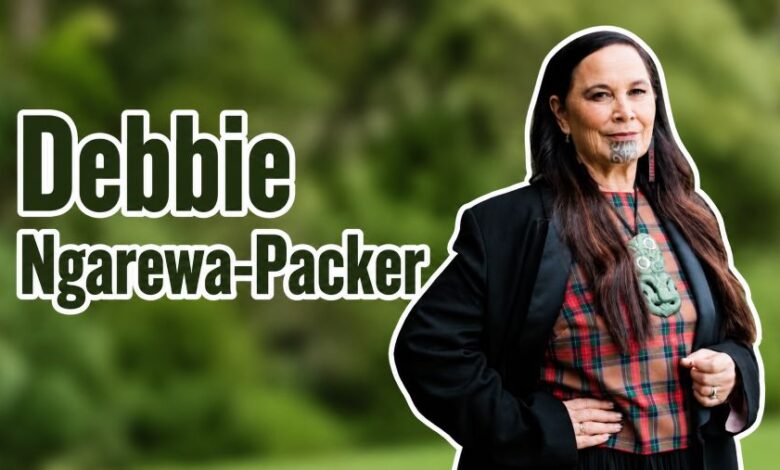
Debbie Ngarewa-Packer is a New Zealand politician, Māori leader, environmental campaigner and community advocate. She represents Te Tai Hauāuru in Parliament and serves as a co-leader of Te Pāti Māori.
Her public career has developed through iwi leadership, local government, environmental action and national politics. She is especially known for defending Māori rights, supporting rangatahi and opposing seabed mining near the South Taranaki coast.
Readers interested in New Zealand people and public life may recognise her as one of the country’s most direct and visible Māori political voices.
Debbie Ngarewa-Packer Quick Facts
| Detail | Information |
|---|---|
| Full name | Debbie Ngarewa-Packer |
| Nationality | New Zealander |
| Background | Māori and Irish ancestry |
| Hometown | Pātea, South Taranaki |
| Iwi connections | Ngāti Ruanui, Ngāruahine and Ngā Rauru |
| Profession | Politician, Māori leader and environmental advocate |
| Political party | Te Pāti Māori |
| Electorate | Te Tai Hauāuru |
| First elected to Parliament | 17 October 2020 |
| Current political position | Co-leader of Te Pāti Māori |
| Parliamentary role | MP for Te Tai Hauāuru |
| Committee role | Member of the Health Committee |
| Education | New Plymouth Girls’ High School and University of Tasmania |
| Further study | Stanford University programme in 2014 |
| Husband | Neil Packer |
| Known for | Māori advocacy, environmental protection and political leadership |
Who Is Debbie Ngarewa-Packer?
Debbie Ngarewa-Packer is the Member of Parliament for Te Tai Hauāuru. She entered Parliament in 2020 and became the electorate MP following the 2023 general election.
Her official New Zealand Parliament profile lists her as a Te Pāti Māori co-leader, party whip or Matarau, and a member of the Health Committee.
She first served as a list MP between October 2020 and October 2023. She then began representing Te Tai Hauāuru as an electorate MP.
As of July 2026, she remains an active figure in New Zealand politics and continues to speak on Māori rights, health, environmental protection and Te Tiriti o Waitangi.
Why Is Debbie Ngarewa-Packer Famous?
She is famous for combining political leadership with many years of work inside Māori communities.
Before entering Parliament, she worked in iwi governance, Māori development, broadcasting and local government. She also became widely recognised for opposing proposals to mine iron sand from the seabed off the South Taranaki coast.
Her public work focuses on mana motuhake, which means Māori self-determination and the ability of Māori communities to shape their own future.
She also supports better health outcomes, fair access to public services, stronger environmental rules and greater Māori participation in political decision-making.
Debbie Ngarewa-Packer’s Nationality and Māori Background
Debbie Ngarewa-Packer is a New Zealander from Pātea in South Taranaki.
Her Māori whakapapa connects her to Ngāti Ruanui, Ngāruahine and Ngā Rauru. These iwi connections are an important part of her identity and political outlook.
She also has Irish ancestry through her mother’s family. Her maternal grandparents moved to New Zealand from Ireland before settling in the North Island.
Ngarewa-Packer was raised in a large extended whānau. She has explained that family, education, resilience and responsibility to the community were central parts of her childhood.
Her father was Hemi Ngarewa, while her mother was Colleen Cleasby. Her mother later became a teacher and principal of Pātea Primary School.
Early Life in Pātea
Ngarewa-Packer grew up in a working-class family connected to Pātea’s freezing works.
Generations of local families depended on the works for employment. Its closure in 1983 caused major financial and social difficulties across the community.
Members of her whānau lost their jobs, and many people had to leave Pātea to find work elsewhere.
However, the community continued supporting one another. Ngarewa-Packer has often described this period as an important lesson in survival, unity and collective strength.
The success of the Pātea Māori Club and its famous song “Poi E” also became a symbol of hope during this difficult time.
She was in the sixth form when “Poi E” became successful. Many of her relatives were connected to the Pātea Māori Club, although she has made clear that she was not one of the main performers.
Education and Academic Background
Ngarewa-Packer attended New Plymouth Girls’ High School as a boarder.
Her whānau helped fund her education because they believed learning could create better opportunities for younger generations.
Leaving Pātea was emotionally difficult for her. However, the experience introduced her to new people, cultures and ways of thinking.
She later completed a Master of Business Administration at the University of Tasmania. She chose Tasmania partly because she wanted to learn about development models used by other Indigenous communities.
In 2014, she studied at Stanford University in California. Her interest was focused on technology, digital business and new employment opportunities for rangatahi.
She later helped groups of young Māori visit Stanford-linked programmes. Her aim was to encourage them to develop ideas that could strengthen their own communities.
Career Before National Politics
Ngarewa-Packer built a wide-ranging career before becoming an MP.
Her professional experience included Māori broadcasting, communications, iwi administration, economic development and governance.
She also served on the South Taranaki District Council and became deputy mayor.
During her local-government career, she worked to strengthen Māori representation in council decisions. She supported the creation of an iwi liaison role and pushed for improvements to local water and sewage infrastructure.
Her work was often connected to protecting waterways, land and community facilities.
This local experience gave her a close view of how council decisions can affect Māori communities, especially in rural areas.
Iwi Leadership and Community Work
Ngarewa-Packer became a senior leader within Ngāti Ruanui and worked on economic, social and environmental issues affecting the iwi.
Her responsibilities included governance, development planning and working with government agencies.
She has also supported digital programmes for rangatahi. These programmes encouraged young people to explore technology, entrepreneurship and creative problem-solving.
Her leadership approach is based on the belief that communities often understand their own challenges better than outside organisations.
She has argued that Māori-led solutions can produce stronger and more lasting results because they are shaped by local knowledge, whakapapa and lived experience.
Environmental Campaigning and Seabed Mining
Environmental protection is one of the most important parts of Ngarewa-Packer’s career.
She became a leading opponent of proposals to mine iron sand from the seabed near the South Taranaki coast.
The campaign brought together iwi, environmental organisations and coastal communities.
Ngarewa-Packer argued that seabed mining could threaten marine ecosystems, fishing areas, cultural values and the long-term health of the coastline.
The issue also reflected a wider question about who should have the power to approve major projects affecting Māori land, water and traditional areas.
Her environmental campaigning helped turn her into a nationally recognised public figure before she entered Parliament.
Political Career and Te Pāti Māori
Ngarewa-Packer became a co-leader of the Māori Party before the 2020 general election. The organisation later formally adopted the name Te Pāti Māori.
She contested the Te Tai Hauāuru electorate in 2020. Although she did not win the electorate that year, she entered Parliament through the party list.
Her election helped Te Pāti Māori return to Parliament after the party had lost its parliamentary representation in 2017.
In October 2023, Ngarewa-Packer won Te Tai Hauāuru and became its electorate MP.
Her parliamentary work has included health, environmental policy, poverty, Māori development and constitutional matters connected to Te Tiriti o Waitangi.
She has served on several committees, including committees dealing with health, business, the environment and parliamentary rules.
Debbie Ngarewa-Packer’s Current Roles
As of July 2026, Debbie Ngarewa-Packer represents Te Tai Hauāuru as a Te Pāti Māori MP.
She has served as a party co-leader since November 2020.
She became the party’s whip, known as Matarau, again in September 2025. The role includes helping organise the party’s work inside Parliament.
She is also a member of the Health Committee, a position she has held during the current parliamentary term.
These responsibilities place her at the centre of Te Pāti Māori’s political strategy and parliamentary activity.
Political Priorities and Public Views
Ngarewa-Packer regularly speaks about mana motuhake and Māori control over decisions affecting Māori communities.
She supports the protection of Te Tiriti o Waitangi and believes Māori should have an equal role in decisions about land, water, health and public services.
Health equity is another major concern. She has argued that the health system must respond more effectively to the needs and experiences of Māori patients.
Her political priorities also include reducing poverty, improving housing conditions, supporting whānau and protecting the environment.
She is known for using direct language and for expressing her Māori identity openly in Parliament.
Leadership Style and Public Image
Ngarewa-Packer presents herself as a grassroots leader rather than a traditional career politician.
Her speeches often draw on experiences from Pātea, iwi leadership and environmental campaigns.
She regularly uses te reo Māori and tikanga Māori during political events and parliamentary appearances.
Supporters view her as a determined advocate who is willing to challenge powerful organisations and government policies.
Her political style can also create strong public debate. However, her central message remains focused on Māori rights, fairness and community-led change.
Debbie Ngarewa-Packer’s Husband and Family Life
Debbie Ngarewa-Packer is married to Neil Packer.
She has described living in an intergenerational household with her husband, children and mokopuna on ancestral land near Pātea.
Her family property has included an orchard, chickens and sheep.
She has spoken positively about a simple family life based on sharing food, caring for relatives and keeping close connections between generations.
Her public interviews show that whānau remains an important influence on both her personal values and political work.
Work With Rangatahi
Supporting rangatahi has been one of Ngarewa-Packer’s long-term interests.
She helped establish after-school and holiday programmes focused on digital innovation.
These programmes encouraged young people to use technology to develop businesses, find employment and solve local environmental problems.
She has said that young Māori should be shown their abilities and potential rather than constantly being told where they are falling behind.
Her work with rangatahi connects education with mana motuhake. The aim is to help young people gain skills while remaining connected to their whānau, marae and communities.
What Makes Her Story Important?
Debbie Ngarewa-Packer’s journey connects several parts of modern New Zealand history.
Her family experienced the effects of land confiscation, economic change and the closure of a major local employer.
She later moved through education, community work, iwi leadership, local government and Parliament.
Her story also shows how environmental campaigning can lead to wider political influence.
For many supporters, she represents a style of leadership built around whakapapa, community responsibility and direct action.
Frequently Asked Questions
What is Debbie Ngarewa-Packer’s nationality?
She is a New Zealander and a Māori political leader from Pātea in South Taranaki.
What is Debbie Ngarewa-Packer’s background?
She was raised in an extended whānau with connections to Ngāti Ruanui, Ngāruahine and Ngā Rauru. She also has Irish ancestry through her mother.
What political party does Debbie Ngarewa-Packer belong to?
She belongs to Te Pāti Māori and serves as one of the party’s co-leaders.
Which electorate does Debbie Ngarewa-Packer represent?
She represents Te Tai Hauāuru in the New Zealand Parliament.
When did Debbie Ngarewa-Packer enter Parliament?
She was first elected as a list MP on 17 October 2020.
Where did Debbie Ngarewa-Packer study?
She attended New Plymouth Girls’ High School, completed an MBA at the University of Tasmania and undertook study at Stanford University in 2014.
Who is Debbie Ngarewa-Packer’s husband?
Her husband is Neil Packer.
What is Debbie Ngarewa-Packer known for?
She is known for Māori political leadership, iwi development, environmental protection, opposition to seabed mining and advocacy for mana motuhake.
Is Debbie Ngarewa-Packer still an MP?
Yes. As of July 2026, she is the MP for Te Tai Hauāuru, a Te Pāti Māori co-leader and a member of the Health Committee.
Conclusion
Debbie Ngarewa-Packer has developed a public career shaped by Pātea, whakapapa, education and community service.
Her journey began with local and iwi work before expanding into environmental campaigning, council leadership and national politics.
Today, she is one of Te Pāti Māori’s senior figures and represents Te Tai Hauāuru in Parliament.
Her work continues to focus on Māori self-determination, environmental protection, health equity and creating better opportunities for future generations.





3 Comments